Home › Common Problems › Failing Bathtub Surround or Tub Liner
Failing Bathtub Surround or Tub Liner
in Minneapolis, MN
Starting in the 1980s and through the 1990s, many Minneapolis homeowners installed prefabricated tub surrounds — either fiberglass panels, acrylic kits, or adhesive-applied tub liners — as a fast alternative to tile. While initially appealing, these systems have a limited lifespan that many have now exceeded, and Minneapolis's climate accelerates their failure. The adhesive bonds used to attach wall panels or liners to the original tub degrade in the presence of humidity, and the thin material flexes enough under daily use to break caulk seals at seams and corners — allowing water to travel behind the entire assembly into the wall framing.
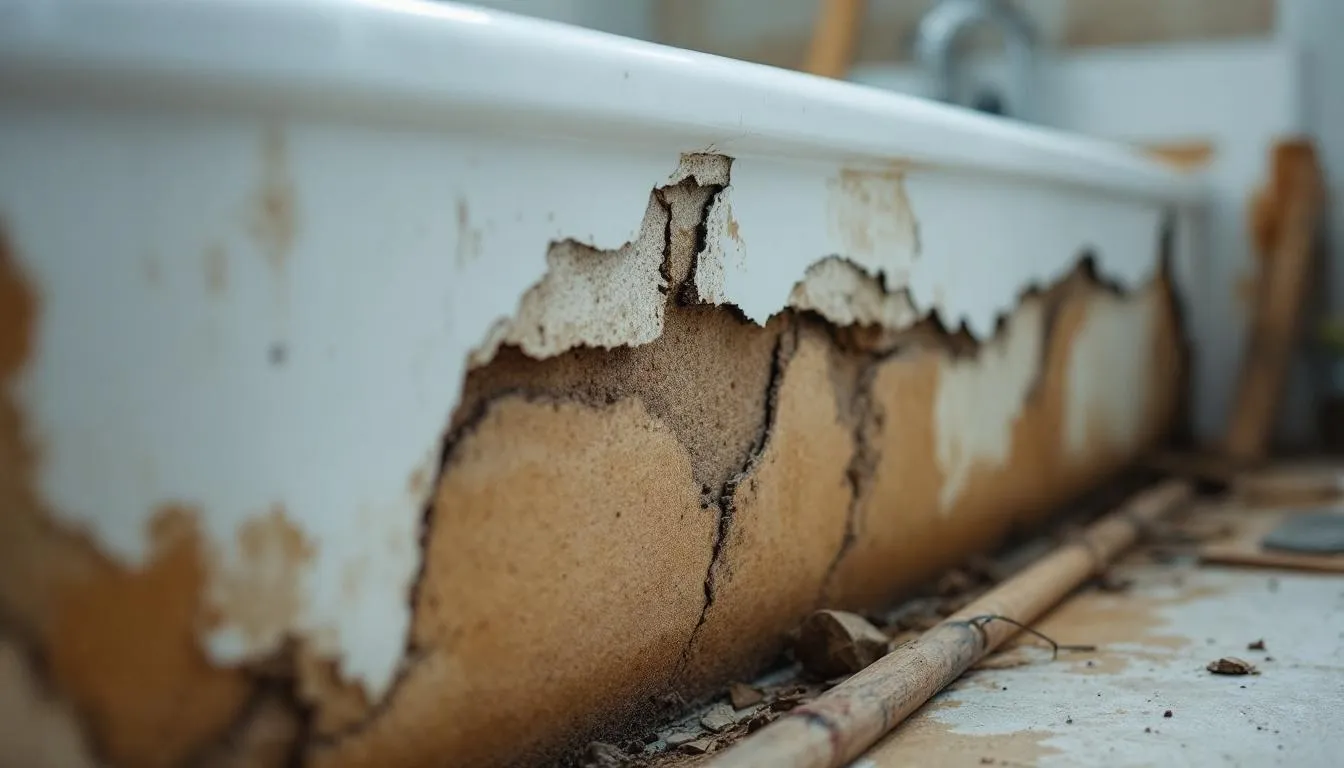
Telltale Signs
Warning Signs to Watch For
- Visible gaps or separation at the seams between surround panels, especially at corners
- A hollow or drum-like sound when pressing on surround panels anywhere on the wall
- Mold or mildew appearing at the base of the surround where it meets the tub deck
- The surround flexing noticeably when leaned against or cleaned with pressure
- Water appearing behind the access panel on the plumbing wall after bathing
- Yellowing, crazing, or surface degradation across the surround material
Root Causes
What Causes Failing Bathtub Surround or Tub Liner?
Adhesive Bond Failure Behind Panels
The adhesive used to bond fiberglass or acrylic surround panels to the drywall substrate was never designed for the relentless humidity cycling that occurs in a Minneapolis bathroom used daily through a five-month heating season. As adhesive releases, panels flex away from the wall, corner caulk tears, and water travels freely behind the panels into the wall cavity and framing.
The Fix
Surround Removal and Tile or Solid-Surface Replacement
The failed surround panels are removed, the substrate is inspected and replaced where wet or damaged, and the wet area is rebuilt with either a properly bonded tile installation or a modern solid-surface product mechanically fastened and caulked at all joints. Unlike adhesive panel systems, the replacement is built to handle Minnesota's humidity extremes long-term.
Tub Liner Moisture Entrapment
Acrylic tub liners installed over original cast iron or steel tubs in Minneapolis homes trap any moisture that migrates beneath them, creating a permanently wet environment against the original tub surface and surrounding walls. Minneapolis's old cast iron tubs, when encased in a liner with failed perimeter seals, become hidden incubators for mold and bacteria.
The Fix
Tub Liner Removal and Tub Resurfacing or Replacement
The liner is removed, the original tub and surrounding substrate are inspected and dried, and the homeowner can choose between professional resurfacing of the original cast iron tub or full tub replacement. Removing the liner eliminates the hidden moisture trap and restores the ability to properly inspect and maintain the fixture.
Corner and Seam Caulk Deterioration
In a prefabricated surround system, the inside corners and horizontal seams where panels meet are the system's most vulnerable points. Minneapolis homes experience enough seasonal framing movement that caulk at these joints — particularly when it was the wrong product type or was applied over mold-inhibiting soap residue — fails within a few years of installation, opening direct water pathways behind the surround.
The Fix
Seam and Corner Recaulking with Backer Rod
All failed caulk is removed, seams are cleaned and allowed to dry completely, and backer rod is installed in gaps larger than a quarter inch before high-quality mold-resistant silicone caulk is tooled into every seam and corner. This targeted repair is viable only when the substrate behind the panels remains dry and structurally sound.
Self-Diagnosis
Which Cause Applies to You?
Check the signs you're observing to narrow down the likely root cause before your inspection.
| What You're Seeing | Adhesive Bond Failure Behind Panels | Tub Liner Moisture Entrapment | Corner and Seam Caulk Deterioration |
|---|---|---|---|
| Panels flex away from the wall and spring back when pressed | |||
| Musty smell coming from beneath a tub liner when the drain cover is removed | |||
| Open gap visible at a corner seam between two surround panels | |||
| Hollow sound across most of the surround wall surface | |||
| Water discovered pooling between the liner and the original tub | |||
| Caulk bead at the tub-to-surround joint has cracked and pulled away |
Free Inspection
Get a Diagnosis in Minneapolis
An on-site inspection is the only way to confirm which cause applies to your property. Free, no obligation.
(952) 206-8344Free on-site inspection
Written estimate before work starts
Serving Minneapolis & surrounding areas
Other Problems
Also Helpful